Hemodialysis is a treatment protocol for end stage kidney diseases by using a machine to filter the patient’s blood, outside the body. This happens because patient kidneys are not able to filtrate the blood and remove the waste products, excess fluid and electrolytes from the body.
Hemodialysis doesn’t cure kidney disease, but it can help the patient to live longer and feel better. Learning about the hemodialysis process and your vascular access can help you take an active role in your treatment.
Vascular access is an opening placed by a minor surgery in the blood vessel that allows the blood to pass from the body to the dialyzer (the filter). This is happening as the blood goes through a needle and travels by a soft tube to the dialyzer.
Inside the dialyzer there are thin fibers that filter the blood and remove the wastes, after that the machine will return the clean blood to the body through this vascular access.
Your doctor will do the access weeks or months before starting the hemodialysis treatment. This will allow your access to heal before using it.
The fistula is a long-term access made by a vascular surgeon. It is the best type of vascular access, and tends to be less likely to get infected than grafts, but it’s hard to be created and requires at least several months to heal before starting the hemodialysis process.
Fistula access is made by joining an artery and a vein in your arm (usually the arm that you use less often). After placing the fistula, the blood flows more rapidly through it.
During the hemodialysis, two needles are inserted into the vein, one to draw blood and one to return it back.
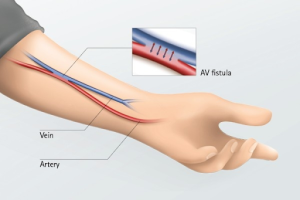
When you get an AV fistula, your doctor will probably let you go home on the same day of the surgery.
Arteriovenous graft, is a long-term access made in the arm by using a U-shaped piece of soft tube to connect an artery and a vein together. Usually, doctors prefer this type of access if your blood vessels are too small, and it’s hard to form an AV fistula.
In AV graft surgery, the doctor will use a local anesthetic to numb the area where the surgeon creates the AV graft. The patient may need to stay one night at the hospital.
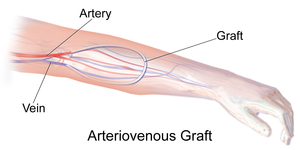
The dialysis needles can be placed into the graft after 2 to 4 weeks from the surgery. An AV graft is more likely to have problems with:
As the AV graft is made of synthetic material (plastic), it`s at a great risk for becoming Infected.
Narrowing of the AV graft may happen, that leads to clotting. Repeated blood clots can block the flow of blood through the graft. Thus, a graft can be placed in the thigh or even the neck.
Central venous catheter (CVC) is a soft plastic tube that is placed in a large vein in the neck, or the chest. It’s usually used for short term hemodialysis treatment (emergency cases of hemodialysis). From there, the tubing goes into a central vein that leads to the heart.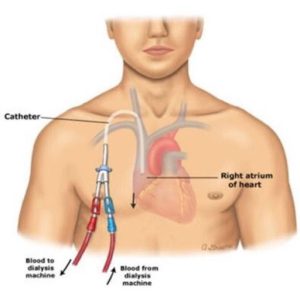
It should be noticed that CVC is:
CVC has more problems than AV graft and AV fistula, so they are not the best choice as a permanent access.
How to take care of my vascular access
A Patient with AV grafts or CVC should know that these types of vascular access are more likely to become infected.
Signs of infection are:
Day to day care of your vascular access
There are three types of vascular access that can be placed for patient who must go through hemodialysis treatment:
Learning about the vascular access and the hemodialysis process can help the patient to take an active role in their treatment.
In this article we discussed in detail the most important day to day self-care tips that might support and help the patient to have a healthy long term vascular access.